
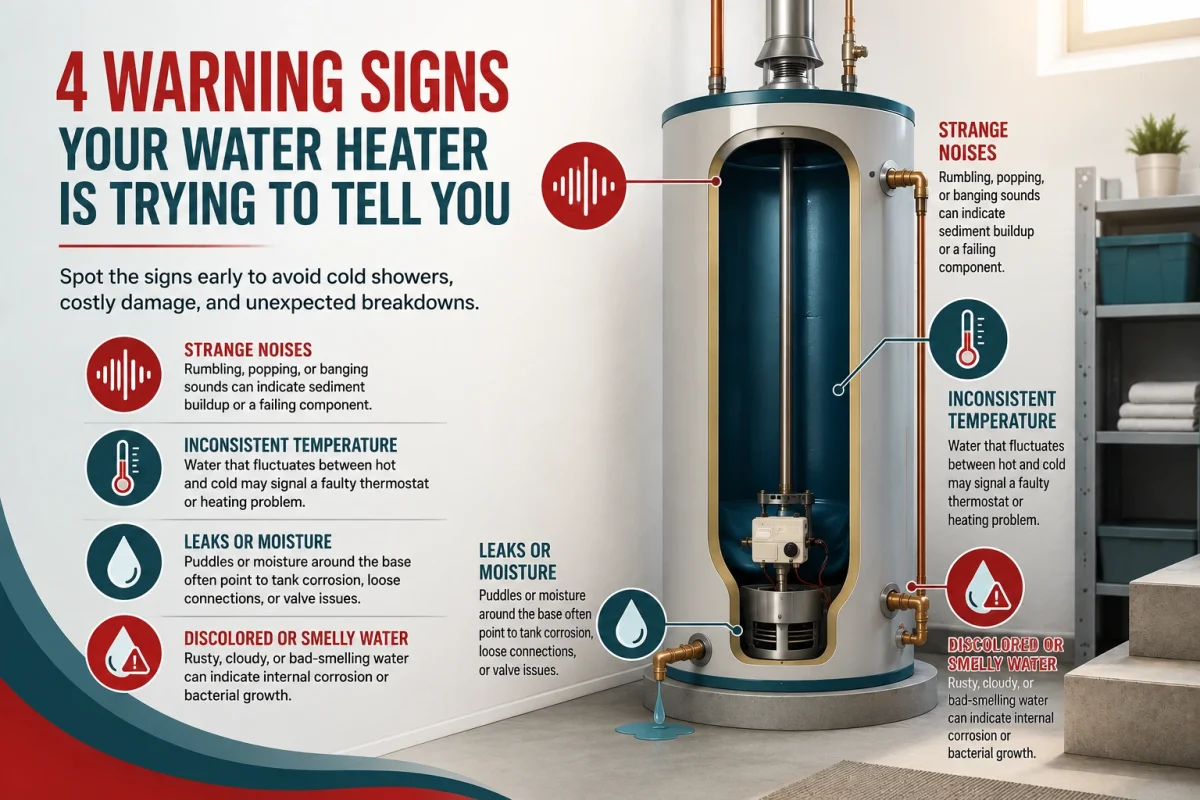
Water heater warning signs Hamilton almost always show up before a tank fails completely nobody notices their hot water tank until a cold shower or a puddle on the basement floor forces the issue. The good news is that a strange noise, a slow leak, an odd smell, or water that just won’t get hot are all early signals your tank is trying to tell you something. This guide walks through every warning sign our technicians see across Hamilton, Ancaster, Dundas, Stoney Creek, and Waterdown, what each one actually means, what’s safe to check yourself, and when to stop troubleshooting and call a professional.
Whether your tank is dripping, making a racket in the basement, or producing water that smells or looks off, you’ll find a clear answer below not generic advice, but the same diagnostic logic our team uses on real Hamilton homes.
🔧 Spotted One of These Signs?
Get a Straight Answer From a Local Hamilton Technician
Our licensed technicians diagnose leaks, noises, and heating problems the same day in most cases. No pressure sales, no surprise costs — just an honest fix.
Why Hamilton Homes See So Many Water Heater Warning Signs
Hamilton’s housing stock is a mix of century homes near the escarpment, mid-century builds in the lower city, and newer construction out toward Waterdown and Flamborough and water heaters in every one of them face the same local stressors. Hard water throughout much of the region speeds up mineral and sediment buildup inside the tank. Older homes often have galvanized or aging copper plumbing that reacts differently with a new unit than the original one it replaced. And basements that run cool and damp for half the year make it easy to miss a slow leak until it’s already caused damage.
Most water heater warning signs in Hamilton fall into one of six categories, and each one has a different level of urgency.
- Leaks — from a loose fitting, or a genuine tank failure
- Temperature problems — no hot water, inconsistent temperature, or water that’s too hot
- Smells — ranging from harmless to a genuine safety hazard
- Strange noises — popping, sizzling, ticking, or knocking
- Rusty or discoloured water — a sign of internal corrosion
- Age-related decline — a tank simply reaching the end of its service life
We’ll break down each one below, starting with the issue that sends the most Hamilton homeowners searching for help: a leak.
Leaking Water Heater: What It Means and What to Check
A leak near the top of the tank is one of the most common water heater warning signs Hamilton homeowners call us about. Fortunately, it’s also one of the easier problems to fix. On an electric unit, a top leak usually comes from a loose hot or cold outlet pipe connection or an inlet valve that’s no longer sealing properly. Both issues typically require a straightforward repair rather than a full tank replacement.
A leak lower on the tank, especially pooling water directly underneath the unit, is a different story. That usually points to internal corrosion or a crack in the tank itself, which is not repairable at that point, replacement is the only safe option. This is one of the clearest signs you need a water heater replacement rather than a repair.
What to Do If You Find a Leak
- Turn off the power (electric) or gas supply (gas unit) to the water heater
- Shut off the cold water supply valve feeding the tank
- Note where the water is coming from top, bottom, or a specific fitting
- Call for repair before the leak worsens or causes water damage to your basement
No Hot Water or Water Temperature Problems
In Hamilton, inconsistent water temperature is one of the most common water heater warning signs our team hears about. Either the water doesn’t get hot enough, or it comes out scalding. In most cases, the thermostat is the cause. It may have been bumped accidentally, or it may have drifted out of calibration over time and simply needs to be reset or adjusted.
If adjusting the thermostat doesn’t solve it, the problem is likely a faulty thermostat itself, a failing heating element (on electric units), or a burner or pilot issue (on gas units) all jobs for a licensed technician. Manufacturers generally recommend a setting around 120°F (48°C), which balances comfort with both safety and energy efficiency; anything set much higher increases both your energy bill and the risk of scald injuries.
Does Your Hot Water Smell Strange? Here’s What Each Smell Means
Unusual odours from your hot water tap are another important water heater warning sign Hamilton homeowners shouldn’t ignore. They can range from a minor nuisance to a genuine safety concern, so it’s important to know the difference.
Rotten Egg Smell
If the hot water itself smells like sulphur or rotten eggs but the cold water doesn’t, this is almost always bacteria growing inside the tank commonly triggered by the anode rod reacting with certain water conditions. Run the hot water for a few minutes, then check the tank; a persistent rotten-egg smell usually means the tank needs a full flush, and in some cases the anode rod needs replacing.
Musty or Metallic Smells
A metallic smell often accompanies rusty water and points to internal tank corrosion. A musty smell is less common with water heaters specifically but can indicate stagnant water sitting in a tank that hasn’t been used or flushed in a long time common in seasonal or secondary properties.
Water Heater Making Noise? Here’s What Each Sound Means
Strange noises are among the most overlooked water heater warning signs in Hamilton. Water heaters make a surprising variety of sounds. While some are harmless background hums, others indicate a problem that needs attention. Here’s how to tell the difference.
Popping or Rumbling
A popping, rumbling, or crackling sound is the single most common water heater noise we hear about, and it’s almost always caused by mineral deposits from hard water settling at the bottom of the tank. As hard water heats up, minerals such as calcium carbonate and magnesium separate from the water and collect at the bottom of the tank, forming a layer of scale.
Given Hamilton’s regional water hardness, this is especially common in homes that don’t flush their tank annually. As water heats beneath that hardened scale, steam bubbles become trapped and burst, creating the distinct popping or rumbling sound homeowners hear. It’s not dangerous in the short term, but the sediment layer makes your water heater work harder, reduces efficiency, and accelerates wear on the tank over time.
Sizzling or Hissing
A sizzling sound when you turn on the hot water is usually caused by restricted water flow often a water inlet valve that isn’t fully open. It can also point to an issue with the T&P (temperature and pressure) relief valve, which is designed to release water automatically if pressure inside the tank builds too high. This valve is a critical safety feature, so a sizzling or hissing sound near it shouldn’t be ignored.
Ticking
A ticking sound as the tank heats and cools is typically caused by pressure fluctuations working through the outlet and inlet nipples and heat traps small components designed to improve energy efficiency by preventing heat loss through the pipes. When these develop an issue, a technician can usually replace them without touching the tank itself.
Knocking (Water Hammer)
A sharp knocking sound is often what’s known as water hammer. It happens when water flow through your plumbing is abruptly stopped a faucet or valve closing quickly and the resulting shockwave travels back through the pipes to your water heater. Over time, enough force can actually cause the tank’s shell to expand slightly, which is a real concern for tank longevity. A water hammer arrestor, installed by a technician, absorbs that shock and eliminates the noise.
Running Water Sound After the Tank Has Filled
If you hear what sounds like running water even after your tank should be full and idle, that’s not a normal water heater sound at all it usually means a broken or leaking pipe somewhere in the system. Check your water meter reading, avoid using any water for an hour or two, and check the reading again. If it’s moved, you have a leak somewhere in your home’s plumbing that needs to be located and repaired.
🔊 Quick Noise Reference
Match the Sound to the Cause
- 💥 Popping/Rumbling — sediment buildup
- 💨 Sizzling/Hissing — restricted flow or valve issue
- ⏱️ Ticking — heat trap/nipple wear
- 🔨 Knocking — water hammer
Not sure which sound matches your tank? Describe it to our team and we’ll help you narrow it down before booking a visit.
Rusty or Discoloured Water From Your Tap
Rusty, brownish, or discoloured hot water almost always means rust is developing inside the tank itself usually because the anode rod, which is designed to corrode instead of the tank, has become fully corroded and needs replacing. If the anode rod is caught early, replacing it can extend the life of your tank significantly. If the rust has already reached the tank’s steel shell, replacement is typically the more cost-effective long-term option, since a corroding tank will only continue to deteriorate.
One quick way to narrow down the source: run only cold water from a tap. If it’s also discoloured, the issue may be with your home’s plumbing or the municipal supply rather than the water heater. If only the hot water is affected, the tank is almost certainly the cause.
When to Call a Professional vs. When You Can Monitor It
| Issue | Safe to Monitor | Call a Technician Same-Day | Emergency — Shut Off & Call Immediately |
|---|---|---|---|
| Minor leak near top fittings | No | ✅ Yes | No |
| Leak pooling under the tank | No | — | ✅ Yes |
| Popping/rumbling noise | ✅ Short-term | Recommended | No |
| Sizzling near T&P valve | No | ✅ Yes | If constant |
| Rotten egg smell from tap only | ✅ A few days | ✅ Yes | No |
| Gas smell anywhere in home | Never | — | ✅ Yes |
| Rusty water (hot tap only) | ✅ Short-term | ✅ Yes | No |
| No hot water at all | No | ✅ Yes | No |
If you’re weighing whether a repair still makes sense for your unit’s age, our water heater replacement guide breaks down the signs that point to replacement rather than another repair.
Repair or Replace? How to Decide
Most water heater problems are repairable, and repair is almost always the cheaper option upfront. But there’s a point where repair stops making financial sense. As a general rule of thumb:
- Under 6 years old — repair is almost always the right call
- 6–10 years old — repair for minor issues; weigh replacement for major component failures
- 10–15+ years old — replacement is usually more cost-effective, especially for tank leaks or corrosion
Newer water heaters also come with meaningfully better energy factor ratings than units installed a decade or more ago, so replacing an aging tank often pays for part of itself through lower monthly energy costs on top of eliminating the risk of an unexpected mid-winter failure.
Considering a More Efficient Upgrade
If you’re already facing a replacement, it’s worth looking at energy-efficient options rather than a like-for-like swap. Tankless units save basement space and provide a faster hot water recovery rate, while ENERGY STAR-certified heat pump water heaters can use significantly less energy than a standard tank. Ontario homeowners upgrading to an eligible heat pump-based system may also qualify for rebates through Enbridge Gas and Save on Energy’s current Home Renovation Savings program availability and amounts change, so it’s worth confirming current eligibility before you buy. If you’re comparing a water heater upgrade against a broader heating and cooling upgrade, our heat pump page covers how these systems work and where they fit into a Hamilton home.
🏠 Not Sure If You Need Repair or Replacement?
We’ll Give You a Straight Answer — No Pressure Sales
Our technicians will inspect your tank, explain exactly what’s wrong, and give you a written assessment so you can decide with full information — not guesswork.
- ✅ Full transparency, no hidden costs
- ✅ Licensed & insured technicians
- ✅ Over 25 years serving Hamilton
- ✅ Same-week appointments
How to Prevent Water Heater Problems in Hamilton Homes
Many of the issues above are preventable with a small amount of regular upkeep:
- Flush the tank annually — this removes the sediment responsible for popping noises and reduced efficiency; follow manufacturer instructions or have a professional do it
- Check the anode rod every 2–3 years — replacing it early prevents rust, discoloured water, and premature tank failure
- Set the thermostat to around 120°F (48°C) — this reduces both energy use and the risk of scalding, without a noticeable difference in shower comfort
- Insulate exposed hot water pipes — inexpensive foam sleeves reduce heat loss and lower your energy bill
- Fix leaky faucets promptly — a single leaky faucet can waste dozens of gallons of hot water a day
- Book an annual inspection — catching a failing valve or early corrosion before it becomes a leak is far cheaper than emergency repair
For more tips on keeping your home’s mechanical systems running efficiently year-round, our heating and cooling resources hub covers everything from furnace maintenance to indoor air quality.
What You Can Safely Check Yourself vs. What Needs a Technician
✅ Safe to Check Yourself
- Thermostat setting confirm it hasn’t been bumped and is set around 120°F
- Whether a leak is coming from a loose fitting versus the tank itself
- Water meter reading, to confirm a suspected hidden leak elsewhere in the home
- Whether cold water is also discoloured, to help narrow down the source
🚫 Always Requires a Licensed Technician
- Any suspected gas leak or gas appliance repair
- T&P relief valve inspection or replacement
- Anode rod or heating element replacement
- Tank draining and full sediment flush on an older or heavily scaled unit
- Any repair involving electrical components on the unit
For a deeper look at everyday ways to cut your water heating costs beyond repair and maintenance see our companion guide on water heater savings tips for Hamilton homeowners.
How Hamilton Heating and Cooling Handles Water Heater Repairs
We’ve serviced water heaters across Hamilton, Ancaster, Dundas, Stoney Creek, Waterdown, Mount Hope, and Flamborough for over 25 years. We work on gas, electric, and tankless water heaters. During a typical diagnostic visit, we check every fitting for leaks, test the thermostat and heating elements, inspect the anode rod, and confirm the T&P relief valve works properly. A faulty T&P relief valve is a safety risk, not just an inconvenience.
We’ll always give you a full written assessment before any work begins, explain exactly what’s wrong in plain language, and let you decide whether repair or replacement makes more sense for your situation with no pressure either way.
🩺 Diagnosis You Can Trust
Let’s Find the Actual Source of the Problem
Skip the guesswork. Our team will identify exactly what’s wrong with your water heater and give you a clear, honest recommendation.
Frequently Asked Questions
This usually means bacteria has developed inside the tank, often reacting with the anode rod. A full tank flush and, in some cases, replacing the anode rod will usually solve the problem. If you notice the smell throughout your home rather than just at one tap, treat it as a possible gas leak and leave the house immediately.
A leak near the top fittings is usually a minor, repairable issue. A leak pooling underneath the tank is more serious and usually means the tank itself has failed, creating risk of water damage and requiring prompt replacement. Either way, shut off the power and water supply and call a technician.
This is almost always mineral sediment that has built up at the bottom of the tank, common in hard water areas like much of Hamilton. It’s not an immediate safety issue but does reduce efficiency and shorten the tank’s lifespan if left unaddressed. An annual flush typically resolves it.
Pressure changes moving through the outlet and inlet heat traps as the tank heats and cools usually cause ticking noises. This is a low-urgency issue, and a technician can typically resolve it by replacing the affected components.
This is typically water hammer a shockwave that travels back through your plumbing when water flow stops abruptly. Over time it can stress the tank’s shell. A water hammer arrestor, installed by a technician, resolves it.
Cost depends heavily on the issue a thermostat adjustment or minor fitting repair is inexpensive, while a heating element or anode rod replacement costs more. Our technicians provide a full written estimate before any work begins, so you’ll know the cost upfront.
You can safely check your thermostat settings, identify where a leak is coming from, and inspect your water meter yourself. However, always let a licensed technician handle repairs involving the T&P relief valve, gas lines, electrical components, or draining an older tank.
Most standard tank water heaters last 10 to 15 years with regular maintenance. Tankless units often last longer. Annual flushing and anode rod checks are the biggest factors in extending a tank’s lifespan.
For units under 6 years old, repair is almost always the more cost-effective choice. For units over 10 to 15 years old, especially with a tank leak or corrosion, replacement is usually the better long-term value since repeated repairs on an aging tank add up quickly.
Ontario homeowners upgrading to an eligible ENERGY STAR heat pump water heater may qualify for rebates through current provincial and utility programs, such as Enbridge Gas and Save on Energy’s Home Renovation Savings program. Eligibility and amounts change, so confirm current details before purchasing.
Final Thoughts
Most water heater problems give you a warning before they turn into an emergency a noise, a smell, a slow drip, or water that just isn’t as hot as it used to be. Catching those signs early is almost always cheaper and less stressful than dealing with a full tank failure in the middle of winter. When in doubt, a quick call gets you a clear answer instead of a guessing game.
If you’re dealing with any of the issues above, contact our Hamilton Heating and Cooling team and we’ll help you get to the bottom of it safely, honestly, and without the upsell.
For general guidance on water heater efficiency and safety standards, Natural Resources Canada’s water heating resources are a helpful reference. For questions about licensed gas technicians in Ontario, the Technical Standards and Safety Authority (TSSA) is the governing body to check.
📞 Ready When You Are
Noticed a Water Heater Warning Sign? We’re Ready When You Are
Don’t wait for a slow leak or a strange noise to turn into a full tank failure. Our licensed team is ready to help.
