

Quick answer
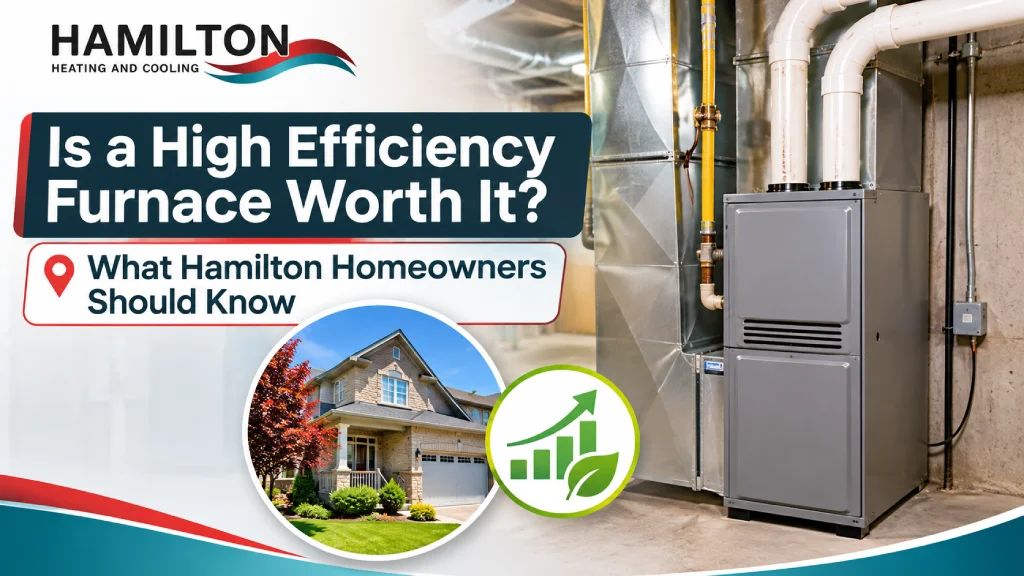
Is a high efficiency furnace worth it? Usually yes if your current furnace is an older 80% AFUE unit, you heat a lot, and the new one can vent without major changes. It matters less in a low-use home or where venting makes the install complicated. The savings come from simple arithmetic you can check below.
This guide is for Hamilton homeowners with an older gas furnace who want to know if a condensing replacement pays off. You will see what AFUE means, what physically changes in the house, when the saving is real, and how to run the numbers on your own gas bill.
What does the furnace AFUE rating tell you?
AFUE shows how much of a furnace’s fuel is turned into useful heat over a heating season. It stands for annual fuel utilization efficiency. It is a seasonal rating, so it covers start-ups, cool-downs and running cycles, not only steady operation.
Picture 100 units of fuel energy. An 80% AFUE furnace converts approximately 80 of them into useful heat over the testing period. The other 20 are energy that is not delivered as useful heat, including combustion and other operating losses. A 96% AFUE furnace delivers approximately 96 as useful heat under the same rating conditions.
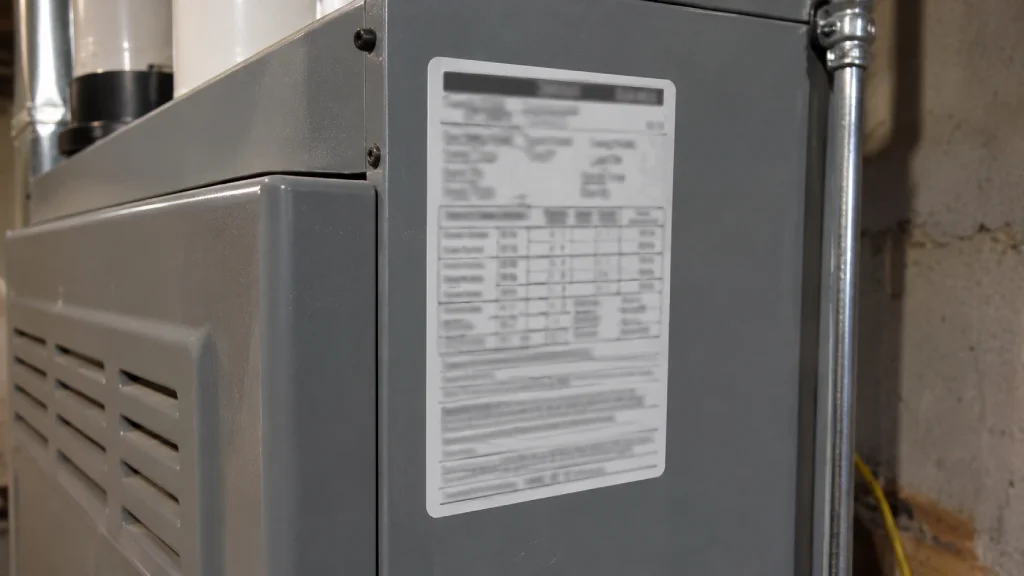
AFUE is a label rating. Real results also depend on the installation, the ducts and how the furnace is set up. Use it to compare equipment, not as a promise about your bill.
High efficiency vs mid efficiency furnace: what actually changes?
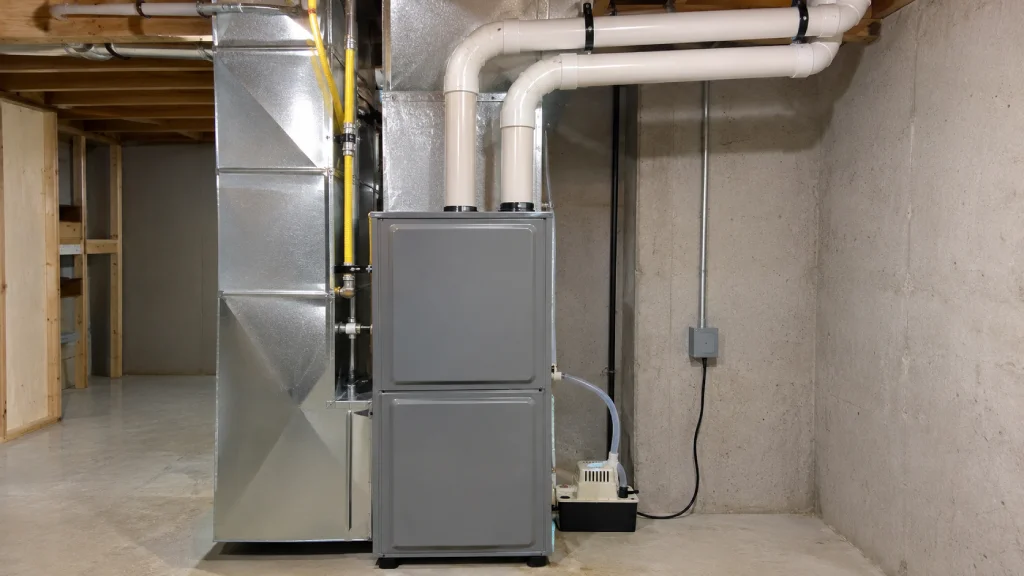
A high efficiency furnace is a condensing furnace. It pulls extra heat out of exhaust that a mid efficiency furnace sends up the chimney. That one change brings the venting and drain differences in the table.
| Mid efficiency (typical older unit) | High efficiency (condensing) | |
|---|---|---|
| AFUE | About 78% to 84%, with 80% common | 95% to 98% |
| Heat exchangers | One primary | Primary plus a secondary |
| Venting | Metal flue into a chimney or vent | Plastic pipe, usually out a side wall |
| Condensate drain | Not needed | Needed, to a drain or a pump |
| Upfront cost | Lower | Higher |
| Operating cost | Higher gas use for the same heat | Lower gas use for the same heat |
Why do the secondary heat exchanger, plastic vent and drain matter?
These three parts change your install, not only the furnace.
- Secondary heat exchanger: it cools the exhaust until the water vapour in it condenses, which gives off extra heat into your airstream.
- Plastic vent: the exhaust is cool enough for plastic pipe, so the vent usually leaves through a side wall instead of rising up a chimney.
- Condensate drain: moisture forms in the secondary heat exchanger and has to be drained safely. The details are covered below.
Can you still buy a mid efficiency furnace?
Under Canada’s current energy efficiency regulations, most new residential single-phase gas furnaces in the regulated category must meet a minimum AFUE of 95%. Natural Resources Canada lists separate 80% limits for furnaces for relocatable buildings and for replacement non-condensing furnaces. A few other specialized products, such as some furnaces with integrated cooling, have their own limits.
These are narrow categories, so ask your licensed HVAC contractor to confirm which equipment is permitted for your property. For most conventional homes the practical choice is between keeping an existing 80% furnace and replacing it with a 95% or better condensing model, and the rest of this guide treats it that way. The rule itself sits in section 259 of the Energy Efficiency Regulations.
Is a high efficiency furnace worth it in Hamilton winters?
It can be, because Hamilton has extended periods of cold winter weather and the saving repeats every cold month. Heating demand can be substantial. The actual savings from a more efficient furnace depend on your home’s heat loss, insulation, thermostat settings and annual heating consumption.
The arithmetic is simple. For the same heat output, the new furnace burns your old heating gas multiplied by old AFUE, divided by new AFUE.
Gas saved = 1 – (old AFUE ÷ new AFUE)
| Old furnace AFUE | New furnace AFUE | Heating gas used drops by |
|---|---|---|
| 60% | 96% | 37.5% |
| 78% | 96% | 18.8% |
| 80% | 96% | 16.7% |
| 80% | 95% | 15.8% |
| 90% | 96% | 6.3% |
| 95% | 96% | 1.0% |
These percentages are estimated reductions in fuel use for the same amount of useful heat. They apply to the gas your furnace uses for heating, not to your whole gas bill, which also covers hot water and cooking. Actual household savings may differ because of weather, thermostat settings, installation quality and furnace operating conditions.
As an example only, a furnace that burns $1,000 of gas a year at 80% AFUE would burn about $833 at 96%. That is a made-up round number for illustration, not a Hamilton average.
Is a 96% AFUE furnace better than a 95% one?
On efficiency alone, only slightly. Moving from 95% to 96% cuts heating gas use by about 1% for the same heat, so that one point rarely decides the purchase. Features such as staging and blower type can affect comfort and running costs more, so compare those as well.
Savings are easier to judge once you know what your current furnace costs to run.
Furnace operating cost calculator
Estimate what your current furnace costs to run each year. The same tool is on our furnace operating cost calculator page.
Furnace Operating Cost Calculator
Calculate the estimated monthly operating cost of your furnace with this quick quiz.
AFUE = Annual Fuel Utilization Efficiency. Standard furnaces are ~80–85%, high-efficiency models are 95–98%.
Better insulation = your furnace works less = lower monthly cost.
Colder climates mean your furnace runs far more hours per heating season.
Check your gas bill for the rate per cubic metre (m³). Average is around $1.20/m³.
Our certified partners can quote a newer high-efficiency furnace that could cut your costs significantly.
By submitting this form, you are giving your consent to receive phone calls and text messages from our contractor partners.
Important: This is a general estimate for informational purposes only. Your actual operating costs may vary based on thermostat settings, furnace age, local climate, and usage patterns.
Get Accurate Quotes from Local Pros
These are estimates. Get precise quotes from certified contractors — for free.
GET FREE QUOTESWhen is upgrading an old furnace worth it?
Upgrading is most likely to pay off when three things line up.
- The furnace is 15 years old or more. It is closer to replacement anyway, so the efficiency gain rides along with a purchase you may face soon.
- Your winter gas bills are high. The more gas you burn for heat, the more a percentage cut is worth.
- Some rooms stay cold. A new furnace is a chance to fix this, not a guaranteed fix, because ducts and airflow cause many cold spots. Ask for the sizing and duct check to be part of the quote.
If you are already leaning toward replacing, our page on furnace replacement in Hamilton covers the process, and the Goodman furnace options show one range of condensing models.
When does a high efficiency furnace matter less?
The upgrade matters less when the furnace barely runs, or when the install turns complicated.
- Low-use home. A seasonal property or a small, well-insulated home burns little gas, so there is less to save and the payback stretches out.
- You already have a 90% unit in good shape. The table above shows about 6.3% less heating gas at best, which may not justify a replacement for efficiency alone.
- Venting or condensate is hard to route. Long pipe runs, tight clearances or a drain far from the furnace add cost and push payback out.
Our furnace installation service in Hamilton starts with these site conditions because they decide the real cost.
If your furnace is older and you are still weighing a repair, this check comes first.
Furnace repair or replace calculator
Weigh repairing your furnace against replacing it before you plan an upgrade.
By submitting this form, you are giving your consent to receive phone calls and text messages from our contractor partners.
Get a Free Furnace Quote
Connect with certified local HVAC contractors for a no-obligation estimate on repair or replacement.
Get Free QuotesWhat does a heating professional check before recommending a condensing furnace?
Venting, condensate, ducts, sizing and combustion air decide whether the saving is realistic. Before recommending a condensing furnace, a heating professional usually checks how your furnace vents today, where a new vent can leave through an exterior wall, where the condensate will drain, the condition of the ducts, the furnace size and the combustion air and clearances. Ask about all of them before you compare quotes. For the money side, see furnace replacement cost in Hamilton.
Venting changes
Replacing an 80% furnace with a 96% one is often possible, but it changes the vent route. The installer looks at how your furnace vents today and where a plastic vent can leave through an exterior wall. The pipe must clear doors, windows, the gas meter and places where snow can pile up, and local code sets the exact distances. If your furnace and water heater share a chimney, removing the furnace can leave the water heater venting into an oversized flue. That may need a liner or a separate vent, so ask your installer to confirm.
Condensate drain
Condensing furnaces produce acidic condensate as moisture forms inside the secondary heat exchanger. The water must be drained safely using an approved drainage arrangement, such as a floor drain or, where one is not close, a condensate pump. Depending on the installation and applicable requirements, a condensate neutralizer may also be necessary.
Protect the drain line against freezing. A line run through an unheated space in a Hamilton cold snap can block and stop the furnace.
Ductwork condition
Leaky, undersized or restricted ducts limit airflow and can cause uneven heating whatever furnace sits at the end of them. The installer checks the ducts and return air so a new furnace is not asked to push air through a system that holds it back.
Sizing
Ask for a CSA F280 heat loss calculation, not a size copied from the old furnace. CSA F280 is the Canadian method for working out how much heat a house needs. Windows, insulation and additions may have changed since the old furnace went in, and an oversized furnace cycles on and off more than it should.
Combustion air and clearances
Furnaces need enough air to burn gas safely. Many condensing furnaces are sealed combustion and draw outside air through their own pipe, but this depends on the model and the installation. The installer checks the combustion air supply and the clearances around the furnace for safe operation and service access, as the manufacturer and local code require.
How do you calculate payback for your own home?
Is a high efficiency furnace worth it for your house? Divide the extra installed cost by the yearly gas saving. The savings calculator below does the gas part for you, so you only need your furnace AFUE and your heating gas use.
- Find the AFUE on your furnace label or manual. Your installer can read it from the model number if it is missing.
- Estimate yearly heating gas from your bills, using winter use above your summer baseline.
- Enter both into the savings calculator below.
- Get a written quote that includes venting, condensate and sizing.
- Divide the extra cost by the yearly saving to get the furnace payback period in years.
Furnace savings calculator
Compare your current furnace with a new one to estimate the yearly saving in heating gas. The same tool is on our furnace savings calculator page.
By submitting this form, you are giving your consent to receive phone calls and text messages from our contractor partners.
Ready to Start Saving?
Get free quotes from certified local contractors and find out the exact cost of upgrading your furnace.
Get Free QuotesPayback here ignores rebates, and programs change. Check what is open to you before you decide. Real results also depend on the points above, so treat the result as an estimate.
Not Sure If a High-Efficiency Furnace Is Worth It for Your Home?
Before investing in a new furnace, get your home's heating requirements and installation conditions assessed. Our team can help evaluate your existing furnace, venting configuration, condensate drainage and heating requirements so you can make an informed replacement decision.Book Your Furnace Assessment
Call 905-847-1641 or visit 21 King St W, 5th Floor, Hamilton, ON L8P 4W7. Mon to Fri 8 to 7, Sat 9 to 4, 24/7 emergency service.
We serve Hamilton, Stoney Creek, Ancaster, Dundas, Waterdown, Glanbrook and Mount Hope. You can also start from our Hamilton heating and cooling home page.
Sources: Natural Resources Canada, Gas furnaces and Justice Laws, Energy Efficiency Regulations, section 259.
